Practical bilingual reading
Bilingual PDF or EPUB? Choose the Format You Will Actually Read
A reader-first comparison of bilingual PDF and EPUB: when stable pages help, when reflowable text is better, and how to choose before translating.
Choose PDF when the document itself is part of the task
PDF is usually the comfortable choice for a report, handbook, contract, research paper, or other material you revisit by section. You may need to compare a defined clause, look at a table, or send a colleague to a particular heading. A page-oriented reading copy supports that work.
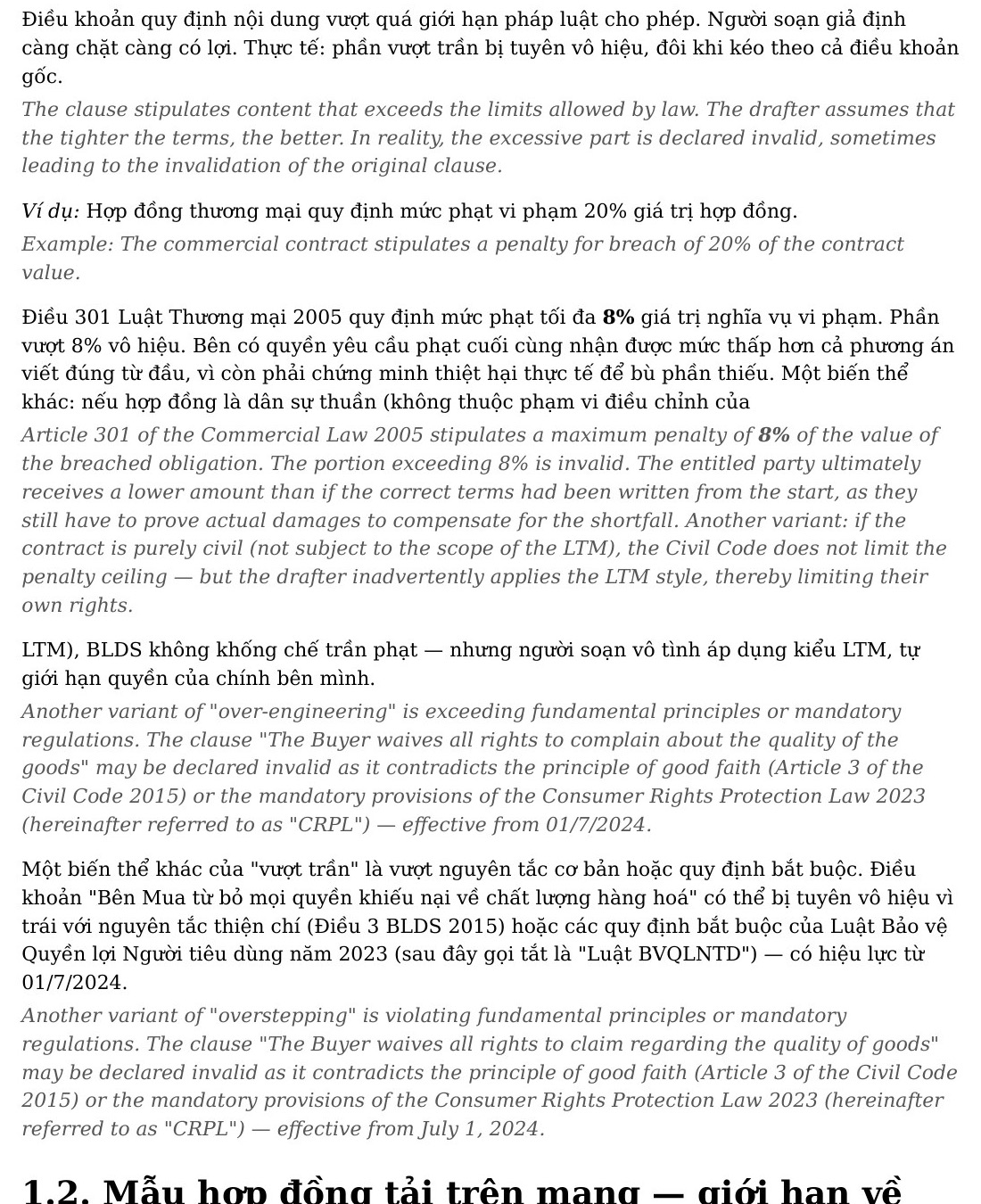
The real production PDF shown here is not forcing both languages into original geometry. It keeps formal structure visible and gives each translated passage space. That is useful when hierarchy carries as much meaning as the sentences.
Choose EPUB when you want to read for a long stretch
EPUB is reflowable: it adapts to a phone, tablet, e-reader, font-size setting, and line-spacing preference. That makes it a better fit for novels, memoirs, essays, and chapters you intend to read in bed, on a train, or across several devices.
The Kindle example is the practical difference. The same bilingual idea fits a narrow screen because text can flow naturally. You are less tied to a fixed page and more able to set the type size that lets you keep reading.
Three questions settle most decisions
Think about the finished reading moment rather than the source extension. Will you return to a heading or table? Will you read several chapters in one sitting? Do you need to change type size often? Those answers are more useful than a general rule about which format is better.
Choose PDF for structured reference material and section-by-section review. Choose EPUB for long, flexible reading. In either format, keeping original and translation together matters more than the filename.
You may want both
A reader can reasonably keep a PDF for desk work and an EPUB for a book-length reading session. The formats solve different problems. A researcher might use a bilingual PDF to check citations and a bilingual EPUB to work through a related book at a comfortable font size.
BilingualText supports text-based PDF and EPUB workflows, so start with how you want to read the finished copy. If you are unsure, preview the source in the format closest to the task at hand.
A quick way to decide when both are possible
Imagine where you will be when you need help. At a desk comparing a policy clause with a table? Choose PDF. On a small screen with one hand free, trying to read three chapters before bed? Choose EPUB. The physical reading situation often settles the question faster than a feature list.
Accessibility preferences matter too. EPUB gives many readers better control over type size, margins, and line spacing. PDF can be easier when a page's fixed relationships are essential, but it is less forgiving when the original type is small or the screen is narrow.
Do not choose EPUB only because the source began as a PDF, or choose PDF only because the file feels official. Translation is a chance to create a version that serves a different reading job from the original. Let that job be the deciding factor.
If you are making a personal library, it can be useful to name outputs by purpose: “reference PDF” and “reading EPUB.” That small distinction makes it obvious which copy to open next time.